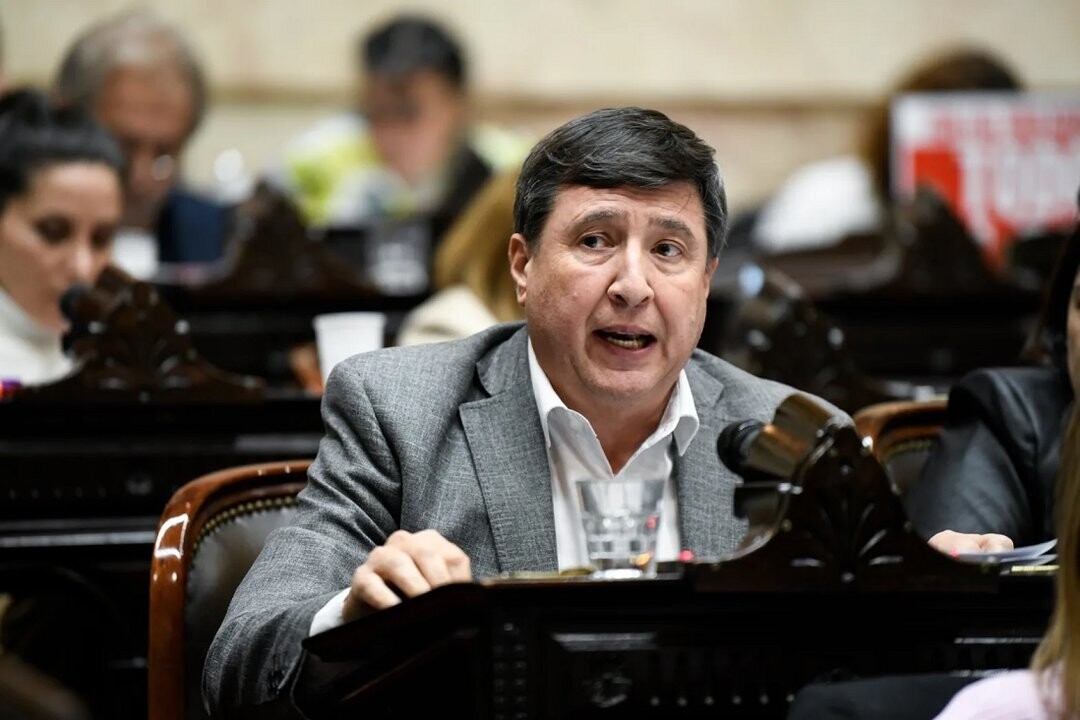
Deputy Daniel Arroyo accused the National Disability Agency (ANDIS) of causing the collapse of the benefits system, expressing his 'anger and deep pain' over the contrast between the alleged 'embezzlement of funds' in a corruption case and the inaction of the body that refuses to enact the Emergency Disability Law and grant minimal raises to therapeutic companions, while the desperation of families grows.
The lawmaker, in statements to Splendid AM 990, to which the Argentine News Agency had access, expressed his discontent in harsh terms, assuring that 'all of this is happening in the same body that is not implementing the emergency disability law.'
He added that despite this and the fact that the law 'has been voted by more than 70% of the Chamber of Deputies', the government 'has simply decided not to budge an inch from its drawn-up plan.'
The legislator affirmed that the 'cruelty' of the situation is accentuated by the government's attempt to remove a federal judge who has systematically ruled in favor of people with disabilities.
And he emphasized that the body that generated 'all that collapse' was the same one that 'handled money that was coming and going, a lot of money here, there.'
On the other hand, Arroyo dismissed the idea that the Emergency Disability Law affects the government's fiscal balance: 'The law has no fiscal impact. All that is involved in rearranging the benefits... all of that is 0.0003 of the GDP, it has no fiscal impact.'
'The judge, who also ruled that the law should be implemented, was also about to declare the government's DNU (Emergency Decree) null and void,' he stated.
Arroyo criticized the government for 'wanting to go against the judge and remove him from the case,' which reflects an 'impossible level of cruelty' and a lack of humanity.
Arroyo underscored the dramatic contrast between the alleged corruption and the reality of the service providers: 'The day the first audios came out talking about 500,000, 800,000, money that was going back and forth, percentages, on that same day therapeutic companions were meeting at the disability agency demanding a raise from earning 2,900 an hour to 3,100.'
This, he emphasized, is an increase of '200 pesos an hour for work that they will be paid for 180 days, 6 months later.'
The deputy was forceful in describing the consequences of inaction: 'The very same place that is not giving them the raises has blocked the emergency disability law, which has collapsed the entire system because today the person does not have access to medication, does not have access to transportation, nor to therapy, nor to accompaniment, the special schools are all about to close.'
The lawmaker concluded that the situation is 'very strong' because 'we are facing a collapse, desperation, an immense level of pain for the family' in the same body where 'money goes, money comes.'
'This magistrate ordered the reinstatement of thousands of pensions that were canceled irregularly, as out of the 110,000 pensions that were canceled, 90,000 are people who never received neither the telegram nor the certified letter,' he added.
Furthermore, he stated that, unlike other countries with far-right governments, Argentina is the only one doing this, when 'no one in the world doubts that a task of the State is to attend to people with disabilities.'
Finally, the deputy stated that the only avenue of action remains the Judiciary, since 'so far the Judiciary has ruled in favor of people with disabilities and their family for a very obvious reason and that is that they are right and that the system has collapsed.'